

When you build outdoor furniture, the finish you choose plays a major role in how long the project will last. Sun, rain, moisture, and seasonal weather changes all affect exposed wood.
One of the most common questions DIY builders ask is simple: Should outdoor furniture be painted or stained?
Painting Outdoor Furniture
Paint creates a protective coating that seals the wood surface. Instead of soaking into the grain like stain, paint forms a barrier that helps block moisture and UV damage.
For many outdoor projects, paint offers the strongest protection against weather.
Advantages of Paint
• Strong resistance to moisture
• Excellent protection from UV exposure
• Wide range of colour options
• Helps hide knots or imperfections in lumber
Paint works particularly well on pine and pressure-treated lumber, which can weather unevenly without a protective coating.
Drawbacks of Paint
Over time, painted surfaces may chip, crack, or peel, especially in harsh outdoor conditions. When this happens, refinishing usually requires sanding or removing the old paint before applying a new coat.
Staining Outdoor Furniture
Stain works differently than paint. Instead of covering the wood, stain soaks into the grain and highlights the natural character of the lumber.
Many builders prefer stain because it allows the wood to keep a natural appearance.
Advantages of Stain
• Shows natural wood grain
• Less likely to peel or chip
• Easier to refresh later
• Works especially well on cedar
Cedar is commonly stained because it already has natural resistance to insects and decay.
Drawbacks of Stain
Stain usually requires more frequent refreshing than paint, although maintaining it is generally quick and easy.
Can You Paint Over Stained Wood?
Yes — paint can be applied over stained wood if you want to change the appearance of your outdoor furniture.
The key is proper preparation.
Basic Steps
- Clean the wood surface
- Lightly sand the wood
- Apply exterior primer
- Apply two coats of exterior paint
With proper preparation, paint can completely transform stained furniture while providing strong protection outdoors.
Choosing the Right Finish for Different Woods
The type of lumber used in a project can influence whether paint or stain is the better choice.
Cedar
Cedar naturally resists rot and insects. Many builders prefer transparent or semi-transparent stains so the grain remains visible.
Pine
Pine can absorb stain unevenly. For many pine projects, paint provides a more consistent finish.
Pressure-Treated Lumber
Pressure-treated lumber should be allowed to dry thoroughly before finishing.
Once dry, it can be either painted or stained.
Best Wood for Outdoor Furniture (A Practical Guide for DIY Builders)
Bringing Weathered Wood Back Before Refinishing
Outdoor furniture that has been exposed to weather will often turn gray over time. This happens when sunlight and moisture slowly break down the outer surface fibers of the wood.
Before applying a new finish, it can help to clean and brighten the wood surface first.
Many builders use a simple diluted bleach solution applied with a pump sprayer to help restore the wood’s natural appearance.

Simple Spray Method
Fill a pump sprayer about halfway with water, then add household bleach until the container is roughly a 50/50 mixture.
Pump the sprayer and apply a fine mist across the wood surface.
Allow the solution to sit briefly, then rinse thoroughly with clean water.
Once the wood dries completely, lightly sanding the surface can help restore a cleaner appearance before applying paint or stain.
A Faster Way to Apply Paint or Stain
Many people apply paint or stain with a brush. While this works well for small projects, it can take a long time when finishing larger outdoor furniture.
Using an electric paint sprayer can dramatically reduce the time required.
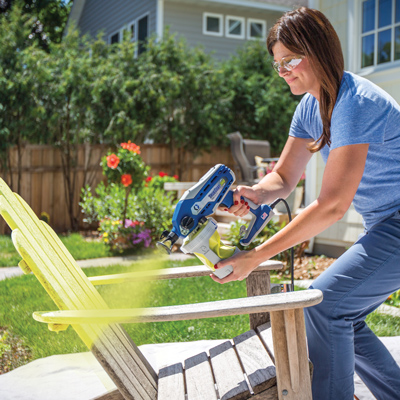
A job that might take three or four hours with a brush can often be completed in about twenty minutes with a sprayer.
Sprayers also make it easier to coat corners, joints, and underside areas that are difficult to reach with a brush.
Builder Tip
When using a sprayer, apply several thin coats instead of one heavy coat.
Light coats help prevent paint runs and allow finish to work its way into joints and exposed end grain, which helps protect the wood from moisture.
A simple project like a garden bench is a great place to practice this finishing technique.
48" Garden Bench Plans – DIY Garden Bench
A Builder’s Theory About Trapped Moisture
Over the years I’ve developed a small theory about finishing outdoor furniture. I’ve never formally tested it, but it seems to make sense based on experience.
Whenever possible, I avoid painting or staining the underside of flat surfaces such as:
• table tops
• bench seats
• chair seats
These are the areas where rainwater tends to sit the longest.
If both the top and bottom surfaces are sealed, moisture that enters the wood may have fewer places to escape.
By leaving the bottom side unfinished, which is rarely visible anyway, the wood may have a place where moisture can evaporate more easily.
Wood naturally expands and contracts as it absorbs and releases moisture, so allowing parts of a project to breathe may help reduce trapped moisture over time.
Maintenance Expectations
No outdoor finish lasts forever, but simple maintenance can keep outdoor furniture looking good for many years.
Typical timelines are:
Painted furniture
4–6 years before refinishing
Stained furniture
2–4 years before a quick cleaning and fresh coat
Furniture exposed to strong sun, wind, or snow may require maintenance sooner.
Final Thoughts
Both paint and stain can work well for outdoor furniture. The best choice depends on the appearance you want and how much maintenance you’re comfortable with.
Paint offers strong protection and unlimited colour options, while stain allows the natural beauty of the wood to show through.
Either way, applying a proper finish is one of the best ways to make sure outdoor furniture lasts for many years.
Final Thoughts: Paint vs Stain
Both paint and stain can protect outdoor furniture well, but they do it in slightly different ways.
Stain works by soaking into the wood fibers, helping protect the interior of the wood from moisture. Because it penetrates the surface rather than forming a thick outer layer, stain is less likely to chip or peel. Over time, however, stain tends to fade gradually due to sunlight, weather, and everyday use.
Paint, on the other hand, works more like a protective shell on the outside of the wood. A good exterior paint forms a solid surface coating that shields the wood from rain, sun, and direct exposure to the elements. Because it sits on the surface, paint usually provides stronger surface protection, but over time it may crack, chip, or peel, eventually requiring sanding and repainting.
Both finishes are doing two jobs — protecting the surface and protecting the wood beneath — but each one tends to be stronger at one role than the other.
Stain protects more within the wood, while paint protects more on the surface of the wood.
Another interesting difference is how they age.
Paint tends to look its best when it is freshly applied, and it often requires repainting every few years to maintain a clean appearance. Stain, however, tends to wear more gradually, and some people actually appreciate the way it ages over time.
A well-used stained chair or bench can almost tell a story. You might see worn areas on the arms or seat where someone sat every morning with a cup of coffee. Those marks become part of the character of the piece — a kind of quiet reminder of how the furniture has been used and enjoyed.
In the end, the choice between paint and stain often comes down to appearance, maintenance preference, and the type of wood being used.
Both finishes can work very well outdoors when applied properly and maintained occasionally.
If you're planning to build your own outdoor furniture, Milltree Designs offers step-by-step woodworking plans designed for practical backyard builds.